Punjabi Desi Months
Punjabi Desi Months

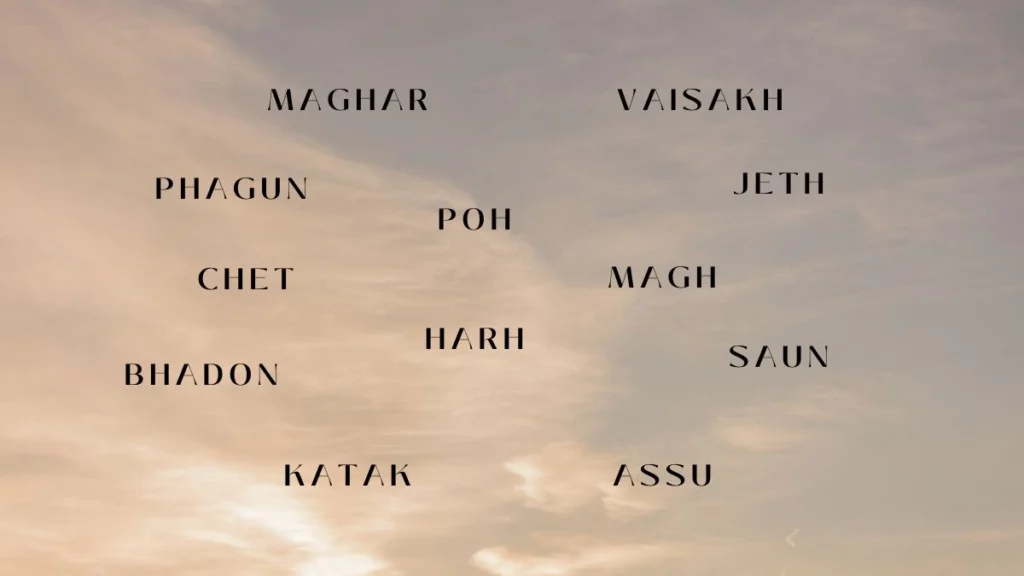
In the Punjabi calendar, the months are typically referred to by their traditional names, which are based on the lunar calendar. Punjabi desi months are used in Punjab and in Punjabi communities to mark various events, festivals, and agricultural activities throughout the year and normally these are know as Punjabi Desi Months. Here are the Punjabi names of the months:

1. ਚੇਤ(Chet) 2. ਵਿਸਾਖ(Vaisakh) 3. ਜੇਠ(Jeth) 4. ਹਾੜ(Harh) 5. ਸਾਵਣ(Sawan) 6. ਭਾਦੋਂ(Bhado)

7. ਅੱਸੂ(Assu) 8. ਕੱਤਕ(Katak) 9. ਮੱਘਰ(Maghar) 10. ਪੋਹ(Poh) 11. ਮਾਘ(Magh) 

12. ਫੱਗਣ(Phagun)

Understanding the Punjabi Desi Months:

The Punjabi calendar begins with the month of Chet, marking the onset of spring, and concludes with Phagun, signalling the end of winter. Each month follows the lunar cycle, resulting in variations in length and timing from year to year. The desi months not only measure time but also serve as a cultural compass, guiding agricultural activities, religious festivals, and social gatherings.

Significance of Punjabi Desi Months:

Agricultural Importance: Punjabi farmers rely heavily on the desi months for planning sowing, harvesting, and other agricultural activities. For example, Vaisakh is crucial for the wheat harvest, while Sawan (Saun) brings relief with the onset of monsoon rains.

Cultural Festivities: Every desi month is marked by vibrant cultural celebrations and religious festivals. From the joyous harvest festival of Vaisakhi in Vaisakh to the exuberant festival of colours, Holi, in Phagun, each month brings its own set of festivities.

Religious Observances: Many Punjabi festivals and religious rituals are tied to specific desi months. For instance, Diwali, the festival of lights, falls in the month of Assu, while the Sikh festival of Guru Nanak Dev Ji Jayanti is celebrated in Katak.

Here are the details about the Punjabi desi months:

1. Chet (ਚੇਤ): This month usually falls in March-April and marks the beginning of the Punjabi calendar year. It is a time of blooming flowers and the onset of spring. Chet is also a time of religious and cultural significance.

Many people observe the Punjabi New Year, and Sikh communities commemorate important historical events during this month, including the birth of Guru Har Rai Ji and Hola Mohalla, a Sikh festival celebrating martial tradition and community service. The pleasant weather and natural beauty make it a season of hope, growth, and new beginnings across rural Punjab.

Sunflower Plant
Sunflower Plant

2. Vaisakh (ਵਿਸਾਖ): Vaisakh typically occurs in April-May and is considered one of the most important months in the Punjabi calendar. It marks the height of spring and the beginning of the harvest season, when wheat — the main rabi crop — is ready to be reaped. The golden fields and joyous atmosphere reflect the hard work of farmers and the deep connection between the people and the land.

The month is especially important for its religious and cultural observances. The festival of Vaisakhi, celebrated on the 13th April, holds dual importance. Agriculturally, it is a traditional harvest festival celebrated with folk dances like bhangra and giddha, fairs, and community feasts. Religiously, Vaisakhi marks the founding of the Khalsa Panth in 1699 by Dhan Dhan Shri Guru Gobind Singh Ji, a defining moment in Sikh history that emphasized equality, courage, and devotion.

Vaisakh is also a month of pilgrimage, prayer, and spiritual renewal. Many devotees visit gurdwaras, particularly Anandpur Sahib and Harmandir Sahib (Golden Temple), to take part in religious ceremonies, kirtan, and community service (seva). The energy of Vaisakh reflects not only agricultural abundance but also a strong spirit of faith, unity, and celebration across Punjab.

Wheat Field during April-May

3. Jeth (ਜੇਠ): Jeth, the third month of the Punjabi calendar, usually falls between mid-May and mid-June. It is known for its scorching heat, as the summer sun reaches its peak intensity during this period. Daytime temperatures often soar above 40°C (104°F), making it one of the hottest months of the year in the Punjab region.

Despite the harsh weather, Jeth holds critical importance in the agricultural cycle. It is a period of intense labor for farmers, as summer crops such as cotton, maize, sugarcane, and pulses continue to grow and require regular irrigation and care. Water management becomes vital during this month, and traditional irrigation systems like Persian wheels (rehat) or modern tube wells are used to keep the fields nourished under the burning sun.

Spiritually, Jeth is also a time of reflection and devotion. In Sikh tradition, this month includes the Shaheedi Purab (martyrdom day) of Guru Arjan Dev Ji, the fifth Sikh Guru, who was martyred in Lahore in 1606. His supreme sacrifice is remembered with great reverence, and devotees often visit gurdwaras, listen to Gurbani kirtan, and engage in acts of seva (selfless service).

Though marked by heat and hardship, Jeth is a testament to resilience, both of nature and of the people who depend on it. It reminds us of the balance between toil and faith, and the strength of communities rooted in land, labour, and legacy.

4. Harh (ਹਾੜ): Harh, the fourth month of the Punjabi calendar, spans from mid-June to mid-July. It is the height of summer, marked by long, sweltering days and dry, intense heat. Temperatures can be extreme, often exceeding 45°C (113°F), making it one of the most challenging months for both people and the land.

Rice Crop in the Month of Harh

Despite the harsh climate, Harh is a crucial month in the agricultural cycle. Farmers continue to care for their kharif crops — especially rice, cotton, and sugarcane, which require timely irrigation and protection from the elements. Water scarcity becomes a major concern, and many communities rely on deep wells, canals, or tube wells to sustain their fields. The hard labor under such extreme conditions is a testament to the dedication and endurance of rural farming families.

5. Sawan (ਸਾਵਣ): Sawan, the fifth month of the Punjabi calendar, typically spans from mid-July to mid-August and is one of the most eagerly awaited months of the year. It marks the arrival of the monsoon season, bringing welcome relief from the scorching summer heat of Harh. With the first drops of rain, the dry earth comes alive — fields turn lush green, trees regain their color, and the air is filled with the fresh scent of wet soil.

For farmers, Sawan is a time of renewed energy and intense agricultural activity. The rains are vital for kharif crops like rice, maize, bajra (millet), and sugarcane, which rely heavily on seasonal rainfall. Sowing and transplanting are in full swing, and the rhythmic patter of rain often accompanies the sound of plows and the activity in the fields. Traditional farming practices blend with nature’s rhythm, making this month a cornerstone of rural life.

Culturally and spiritually, Sawan holds great significance, especially in Punjab. It is considered an auspicious time for weddings, religious ceremonies, and community gatherings. In Sikh and Hindu traditions alike, many people observe fasts, visit temples or gurdwaras, and offer prayers for prosperity, health, and harmony.

Sawan is also a deeply romantic and poetic month, celebrated in Punjabi folk songs and literature. The famous “Sawan di ghadi” (moments of Sawan) are symbolic of love and longing. Women often sing traditional boliyan (folk couplets) and gather to dance giddha, expressing joy, nostalgia, and connection to nature. The month is especially cherished by newlyweds and those separated from loved ones, as the rains evoke emotional intensity and yearning.

Overall, Sawan is a time of fertility, celebration, and emotional depth — a beautiful balance between the hard work of the fields and the soulful expressions of tradition, love, and longing.

Rainy Day during month of Sawan

6. Bhadon (ਭਾਦੋਂ): Bhadon, the sixth month of the Punjabi calendar, falls between mid-August and mid-September. It marks the tail end of the monsoon season, a time when the frequent rains begin to subside and the landscape slowly transitions toward the cooler days of early autumn. The skies often remain cloudy, and occasional showers still nourish the fields, but the intensity of the rains lessens as the month progresses.

Rice Crop in Bhadon Month

For farmers, Bhadon is a month of careful observation and preparation. The crops sown during the rainy season—such as rice, maize, and sugarcane—are now maturing, and the fields demand attention to ensure a healthy harvest in the coming months. This is a critical period to protect crops from pests and waterlogging caused by excessive rain. It is also a time to begin preparations for autumn harvests and the sowing of rabi crops in the near future.

Overall, Bhadon is a month of transition — from rain to sun, from longing to preparation — representing both the physical shifts in the environment and the inner changes that define the rhythm of rural and spiritual life in Punjab.

7. Assu (ਅੱਸੂ): Assu is the seventh month of the Punjabi calendar and typically spans from mid-September to mid-October. It marks the beginning of the festive season in Punjab and much of the Indian subcontinent. As the monsoon recedes and cooler breezes begin to blow, the weather becomes more pleasant, creating the perfect setting for religious observances, cultural gatherings, and family celebrations.

Agriculturally, Assu is a period of gratitude and anticipation. Farmers begin to see the fruits of their labor, with kharif crops like rice and maize nearing harvest. The fields are alive with activity, and the rural landscape buzzes with preparations for harvesting and storing the season’s produce. At the same time, plans begin for the sowing of rabi crops in the coming months.

Culturally, Assu is one of the most vibrant and spiritually significant months of the year. It is associated with major festivals such as:

  • Navratri: A nine-night Hindu festival dedicated to the worship of the divine feminine in various forms (Durga, Lakshmi, and Saraswati). It is marked by fasting, prayer, music, and traditional dances.
  • Dussehra (Vijayadashami): Celebrated on the tenth day of Navratri, Dussehra commemorates the victory of good over evil — the triumph of Lord Rama over Ravana. Effigies of Ravana are burned in symbolic purification, often accompanied by fairs and performances of the Ram Leela (theatrical enactment of the Ramayana).
  • In Sikh tradition, Assu includes important Gurpurabs, such as the ascension (Jyoti Jot) of Guru Nanak Dev Ji and Guru Amar Das Ji, observed with devotion, kirtan, and langar in gurdwaras.

Assu is also mentioned in the Barah Maha (Twelve Months), where Guru Arjan Dev Ji describes the joy of divine presence felt in this month. The inner soul, like the harvest, is seen to mature and bear fruit through faith and devotion.

Overall, Assu is a month of fulfillment, devotion, and community joy — a time when rural and spiritual life come together in harmony, welcoming both the abundance of the earth and the richness of cultural heritage.

8. Katak (ਕੱਤਕ): Katak, the eighth month of the Punjabi calendar, typically spans from mid-October to mid-November. It brings a noticeable change in the weather, with cooler temperatures and crisp autumn air replacing the warmth of the previous months. The skies often clear up after the monsoon, and the days become shorter while nights grow longer and chillier, signalling the slow approach of winter.

For farmers, Katak is one of the most important months of the year. It is the peak harvest season, when the hard work of many months comes to fruition. Crops such as wheat, barley, maize, and pulses are harvested and carefully stored to sustain families through the colder months ahead. This period involves not only reaping but also threshing, drying, and preserving grains and produce, ensuring food security for the village communities.

Katak is also a time of intense agricultural activity and preparation. Farmers repair their tools, maintain irrigation systems, and prepare their fields for the upcoming rabi cropping season, which begins with sowing in late Katak or early Maghar. The transition from harvest to preparation for the next cycle reflects the cyclical nature of rural life and the close bond between the people and their land.

Culturally and spiritually, Katak is rich with festivals and religious observances. It includes the celebrated Diwali (Deepavali) festival, known as the Festival of Lights, which symbolizes the victory of light over darkness and knowledge over ignorance. Homes and streets are illuminated with lamps and fireworks, and communities come together in joyous celebration. In Sikhism, the month also marks the Parkash Utsav (birth anniversaries) of several Gurus, including Guru Nanak Dev Ji and Guru Tegh Bahadur Ji, celebrated with prayer, kirtan, and communal meals (langar).

Katak is also reflected in Punjabi poetry and the Barah Maha, where it is depicted as a time of spiritual introspection and preparation. As the weather cools, the soul too is seen as readying itself for a deeper connection with the Divine during the winter months.

Overall, Katak symbolizes harvest, gratitude, renewal, and spiritual readiness—a month that balances the rewards of past labour with hopeful preparation for the future.

9. Maghar (ਮੱਘਰ): Maghar, the ninth month of the Punjabi calendar, usually spans from mid-November to mid-December. It marks the onset of winter, bringing with it a noticeable drop in temperatures and shorter daylight hours. The air becomes crisp and chilly, often accompanied by early morning fog and frost in rural areas. As the cold sets in, there is a tangible shift in daily life — people begin to don warmer clothing such as woolen shawls, sweaters, and blankets, and homes are prepared to offer protection against the biting cold.

For agrarian communities, Maghar is a time of rest and renewal following the busy harvest and sowing seasons. While fields lie fallow or are prepared for the next planting, farmers focus on maintaining their tools, repairing homes, and caring for livestock, which require extra attention during the colder months. It’s a quieter, more reflective time of year, yet vital for ensuring readiness for the demanding months ahead.

Maghar is also a month of spiritual observance and community bonding. Sikh communities commemorate important Gurpurabs (anniversaries of the Sikh Gurus), including the birth anniversary of Guru Nanak Dev Ji, the founder of Sikhism. Devotees gather in gurdwaras for prayer, singing of hymns (kirtan), and partake in langar (community kitchen), strengthening the bonds of faith and fellowship.

In Punjabi folk tradition and poetry, Maghar is often depicted as a month of introspection, where the cold weather mirrors the soul’s quiet longing for warmth and spiritual light. The shortening days invite people to turn inward, nurturing family ties and personal reflection during the long winter nights.

Overall, Maghar symbolizes the arrival of winter, a time for rest, preparation, and spiritual warmth—an essential phase in the natural and cultural cycle of Punjab.

10. Poh (ਪੋਹ): Poh, the tenth month of the Punjabi calendar, typically falls between mid-December and mid-January and is known as one of the coldest months in Punjab. The winter deepens during Poh, with early morning frost, chilly winds, and often foggy conditions that create a serene yet brisk atmosphere throughout the villages and towns. The daylight hours remain short, and the cold can be quite intense, especially in rural areas where central heating is rare.

Foggy Morning in Poh Month at Village Raowal

This is a month when families and communities come together to seek warmth and comfort. People gather around traditional wood or coal fires (angithi) inside their homes, sharing stories and laughter, reinforcing social bonds amid the cold. The kitchen is alive with the preparation of hearty, nourishing meals such as sarson da saag (mustard greens), makki di roti (cornbread), lentils, and seasonal vegetables that provide much-needed energy and warmth.

Agriculturally, Poh is a relatively quiet period. Farmers monitor their rabi crops, like wheat and barley, which are now growing steadily under the cooler temperatures. Attention is also given to caring for livestock, as animals require additional feed and shelter to withstand the harsh weather.

Spiritually, Poh continues the theme of introspection and devotion. It is a time when many observe religious rituals and festivals, such as Guru Gobind Singh Ji’s birth anniversary (Gurpurab), which falls in this period and is celebrated with great reverence in Sikh communities. Gurdwaras host special prayer services, kirtan, and community meals, providing warmth not only through fire but also through fellowship and faith.

In Punjabi folk culture and poetry, Poh is often associated with resilience and togetherness — a season when the harshness of nature encourages people to lean on one another and celebrate the simple joys of home, family, and tradition.

Fog in month of Magh (December-January)

11. Magh (ਮਾਘ): Magh, the eleventh month of the Punjabi calendar, generally falls between mid-January and mid-February. It signifies the end of the harsh winter season and the gradual transition toward longer, warmer days. Although the cold still lingers, there is a subtle but unmistakable shift in the atmosphere — the sun climbs higher, the days slowly lengthen, and nature begins to prepare for the renewal of spring.

Agriculturally, Magh is a period of hope and preparation. Farmers continue to care for their rabi crops, particularly wheat and barley, which are now maturing in the fields. It is also the time to plan for the upcoming sowing season for various crops, ensuring that the land and resources are ready once the spring rains arrive. The activities in the fields gradually increase as the weather becomes milder.

Culturally and spiritually, Magh holds a special place. Various festivals and religious observances mark the month, bringing communities together in celebration and devotion. For example, the festival of Lohri is traditionally celebrated at the end of Magh or beginning of the next month, marking the close of winter with bonfires, folk songs, and dances. Lohri celebrates the harvest of the rabi crops and symbolizes warmth, prosperity, and community spirit.

In summary, Magh is a month of transition and anticipation, where the cold of winter slowly yields to the promise of spring, encouraging renewed energy, hope, and celebration in the rhythm of Punjabi life.

12. Phagun (ਫੱਗਣ): Phagun, the twelfth and final month of the Punjabi calendar, usually spans from mid-February to mid-March. It is a month of joy, celebration, and renewal, marking the conclusion of the Punjabi year and the eager anticipation of a fresh new beginning with the arrival of spring.

Agriculturally, Phagun is a time when the rabi crops are nearing harvest, and farmers prepare to transition into the new cycle of sowing and cultivation. The fields start to show signs of vibrant life as flowers bloom and the weather grows increasingly pleasant, symbolizing nature’s revival.

Culturally, Phagun is renowned for its exuberant festivities. The most celebrated festival during this month is Holi, the festival of colors, which is observed with unmatched enthusiasm across Punjab and beyond. Holi signifies the victory of good over evil, the arrival of spring, and the joy of life’s vibrant colors. Communities come together to splash colored powders, sing folk songs, dance traditional dances like bhangra and giddha, and share festive meals. It is a time of forgiveness, renewal of relationships, and collective merriment.

Phagun is also a period rich in folk traditions, music, and poetry. The month features prominently in Punjabi literature and the Barah Maha, where it symbolizes the culmination of the yearly cycle — a time to shed the old and embrace the new with hope and devotion. Spiritual gatherings and fairs are common, fostering a sense of unity and cultural pride.

Overall, Phagun is a month of transformation, celebration, and optimism, embodying the vibrant spirit of Punjabi culture and the enduring cycle of life, nature, and faith.

Conclusion

In this blog, we described Punjabi Desi Months. The Punjabi desi months consists of the core of Punjab’s cultural heritage, serving as a timeless reminder of its agricultural roots, religious traditions, and social fabric.

As each month unfolds, it brings with it a fabric of colours, celebrations, and rituals, weaving together the past, present, and future of Punjab’s rich cultural tapestry. Embracing the Punjabi desi months is not just about marking time but celebrating life itself, in all its variety and richness.

FAQ: Punjabi Desi months

1. What are Punjabi Desi months?

Punjabi Desi months refer to the traditional months used in the Punjabi calendar system, which is largely based on the lunar calendar.

2. How many Desi months are there in Punjabi culture?

There are 12 Desi months in Punjabi culture, corresponding to the lunar months.

3. What are the names of Punjabi Desi months?

The names of the Punjabi Desi months are: Chet (ਚੇਤ), Vaisakh (ਵੈਸਾਖ), Jeth (ਜੇਠ), Harh (ਹਾੜ੍ਹ), Sawan (ਸਾਉਣ), Bhadon (ਭਾਦੋ), Assu (ਅੱਸੂ), Katik (ਕੱਤਕ), Maghar (ਮੱਘਰ), Poh (ਪੋਹ), Magh (ਮਾਘ), and Phagan (ਫੱਗਣ).

4. How are Punjabi Desi months used today?

Punjabi Desi months are still referenced in traditional cultural practices, agricultural cycles, and some religious observances among Punjabi communities around the world.

5. Are Punjabi Desi months used in Sikhism?

Yes, Punjabi Desi months are used in Sikhism for determining dates of festivals and other important religious events.

6. Where can I find more information about Punjabi Desi months?

You can find detailed information in Punjabi cultural books, online resources about Punjabi culture and history, or by consulting with elders or scholars knowledgeable about Punjabi traditions.


Harman

Harman is a proud native of Raowal. With a deep-rooted connection to the land and its people, we contribute stories, updates, and insights that reflect the true spirit of Raowal. Our website aims to keep people connected to their heritage and village while showcasing the beauty of village life to the wider world. Especially people from the village Raowal who live abroad.


0 Comments

Leave a Reply

Avatar placeholder

Your email address will not be published. Required fields are marked *