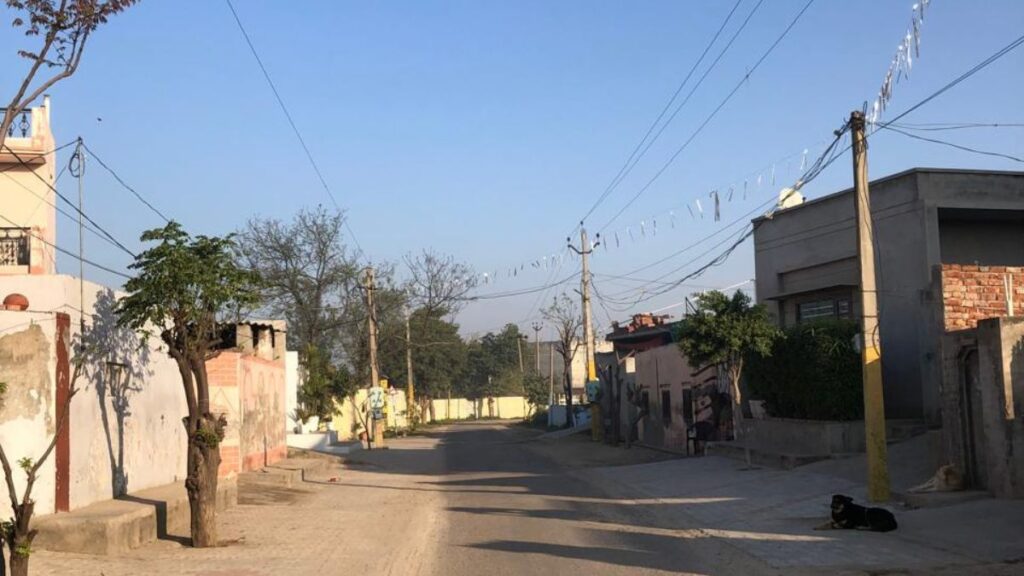
Walking through a Punjab village on a sunny afternoon is more than just a walk. Afternoon walk is a journey into the heart of rural life. The air smells fresh. The sun shines bright, but it’s not harsh. The land feels warm under your feet. Each step connects you to a story, a memory, or a tradition. The village doesn’t try to impress you—it simply shows its truth. And that truth is beautiful. In this walk, you don’t just see things; you feel them. The colors, sounds, and scents blend to tell you about life that moves slowly, but meaningfully.
The Warm Embrace of the Afternoon Sun
Golden Light on the Fields
When the afternoon sun falls on Punjab’s fields, everything seems to glow. The wheat turns golden, standing tall as if showing pride. You can see small shadows playing among the stalks. It’s not too hot—just warm enough to wrap you in comfort. The sunlight spreads like honey across the landscape. It adds beauty and warmth to everything, even the smallest leaf. This light is more than just nature’s glow. It’s a signal that the day is at its peak, a time when life slows down just a bit before the evening rush.
Life Under the Sun
As the sun rests high above, life in the village moves steadily. Farmers walk through their fields with tools in hand, checking the crops. Women dry grains on charpais laid out in front yards. Children run barefoot through open spaces, flying kites or chasing each other. Even the animals, like buffaloes and goats, find comfort under shady trees. There’s no rush. Time flows like a calm stream. Every activity under the sun carries a purpose, shaped by routine but filled with life.
Breathing the Earth – The Soul of the Soil
The Smell of Freshly Tilled Land
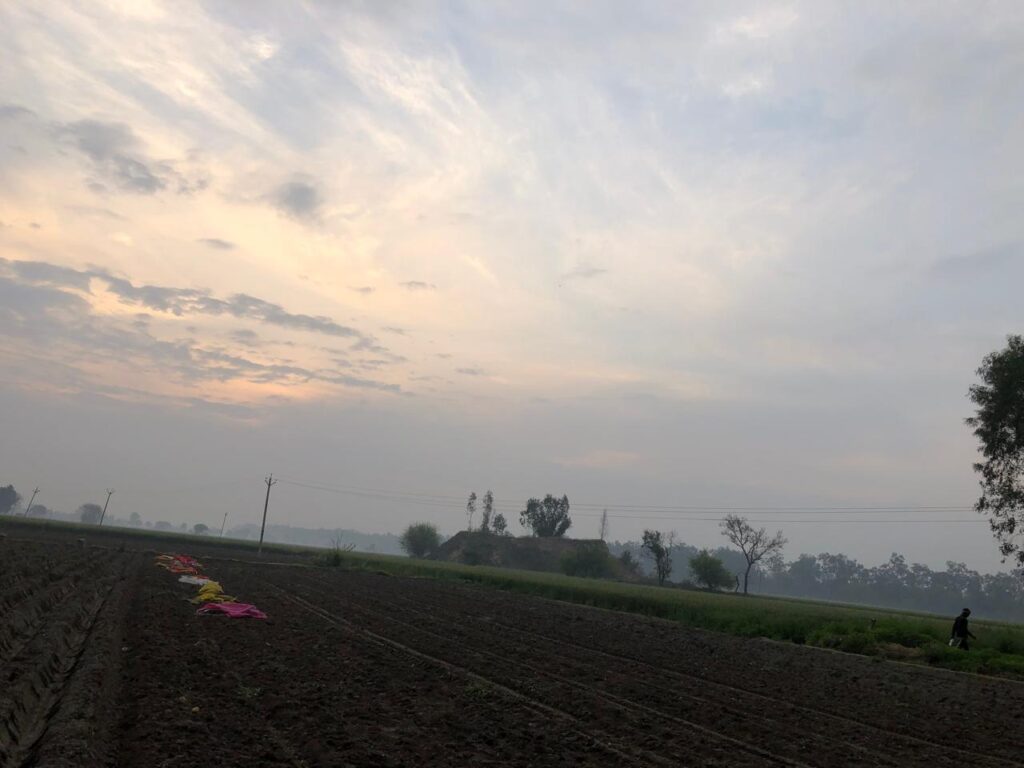
The scent of freshly ploughed soil is like perfume for those who know the land. As the plough turns the earth, it releases a deep, rich smell. This smell is not just dirt—it’s the aroma of fertility, of life waiting to grow. It speaks of monsoons, of hands that have worked the land for generations, of seeds that rest under the surface. It reminds you that this soil is not dead. It’s alive and full of promise. People in the cities rarely experience this. But in the village, it’s everywhere.
The Sound of Oxen and Ploughs
You hear the slow rhythm of wooden ploughs cutting into the land. The oxen snort gently, pulling with strength and trust. Their bells jingle softly as they move. This sound is old. It has echoed through these lands for hundreds of years. It tells you that farming here is not done by machines alone—it’s a partnership between man, beast, and earth. It’s the sound of food being grown. It’s steady, timeless, and grounding.
Starting the Walk – A Mud Path of Memories
Your walk begins on a narrow, winding path made of packed mud and stones. This path is not just a road—it’s a thread that stitches the village together. You walk past hand-built walls, shady trees, and sleepy animals. You might see an old bicycle resting against a wall or a pair of slippers at the doorstep. Each turn in the path brings a small discovery. A flower blooming. A rooster crowing. A boy waving from a distance. This is not a walk for speed. It’s a walk for the soul.
The Green Blanket of the Fields
Wheat, Mustard, and Sugarcane
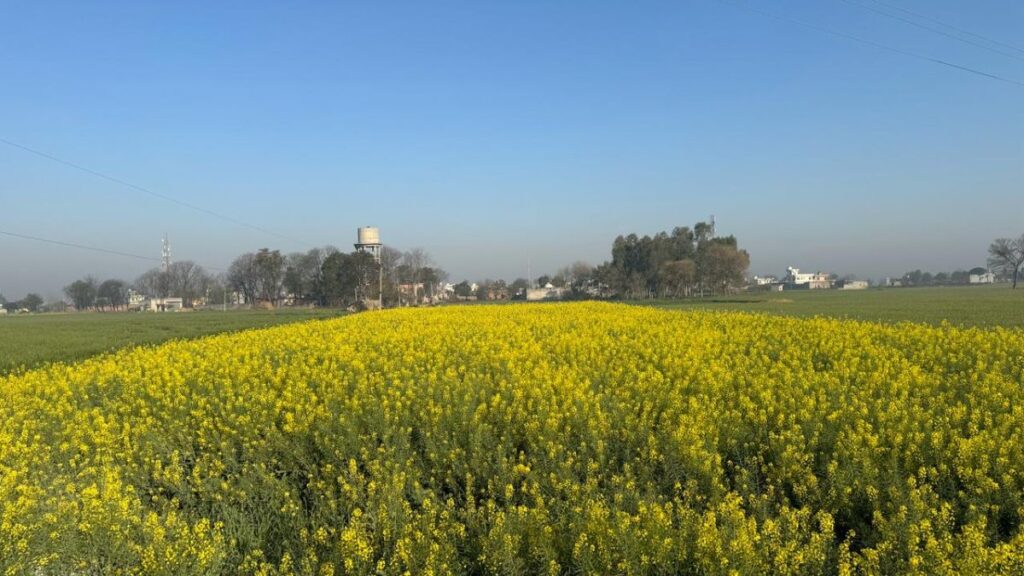
Fields stretch as far as the eye can see. Wheat fields are thick and healthy, with golden tips dancing in the breeze. Next to them, mustard fields glow bright yellow, like patches of sunlight planted into the earth. Sugarcane grows tall and proud, its thick green stalks rustling gently. You see farmers bent over, working with patience and care. These fields are not just crops. They’re lifelines. They feed families, support markets, and carry dreams of future harvests.
The Buzz of Bees and the Whisper of Crops
Nature is always talking in the fields. You hear bees buzzing from flower to flower. Their wings flutter as they collect nectar. Grasshoppers jump through the wheat, and birds sing from trees at the edge. If you stand still, you can hear the crops whisper. The wind passes through the fields, and the leaves brush against each other, sharing secrets only nature understands. This harmony is not forced. It’s natural and eternal.
Meeting Faces Along the Way
A Wave from a Farmer
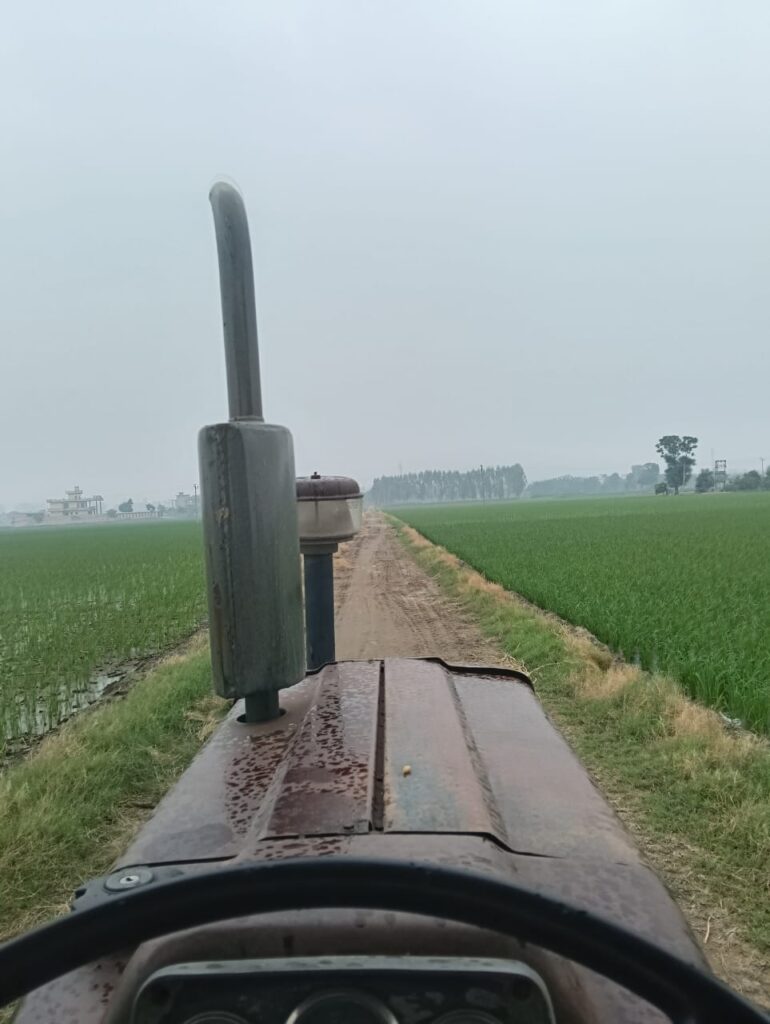
As you walk, you see a farmer on his tractor. He lifts a hand and smiles. It’s a simple hello, but it says so much. It says, “You are welcome here.” His shirt is soaked with sweat, but his eyes are bright. He has worked since morning, yet he takes a moment to greet you. That’s Punjab—hardworking, warm, and always generous.
Children Playing Marbles
In a dusty corner, a group of kids play marbles. They shout and laugh, aiming carefully to knock one another’s marbles out of the circle. Their hands are dirty, their knees scraped, but their joy is pure. They don’t need expensive toys. Just a few marbles, a patch of earth, and some time. Their laughter makes the whole scene feel alive.
Traditional Village Homes
Mud Walls and Courtyards
The homes in the village are simple but full of character. Some are made of mud, others with bricks. The walls are often painted with faded white or bright pink. Inside, there’s usually a courtyard—open to the sky. This space is where families cook, talk, wash, and rest. The house is not fancy, but it feels alive. You sense warmth from the walls. It smells like food, smoke, and flowers. It feels like home—even if it’s not yours.
Chulha Smoke and Charpai Rest
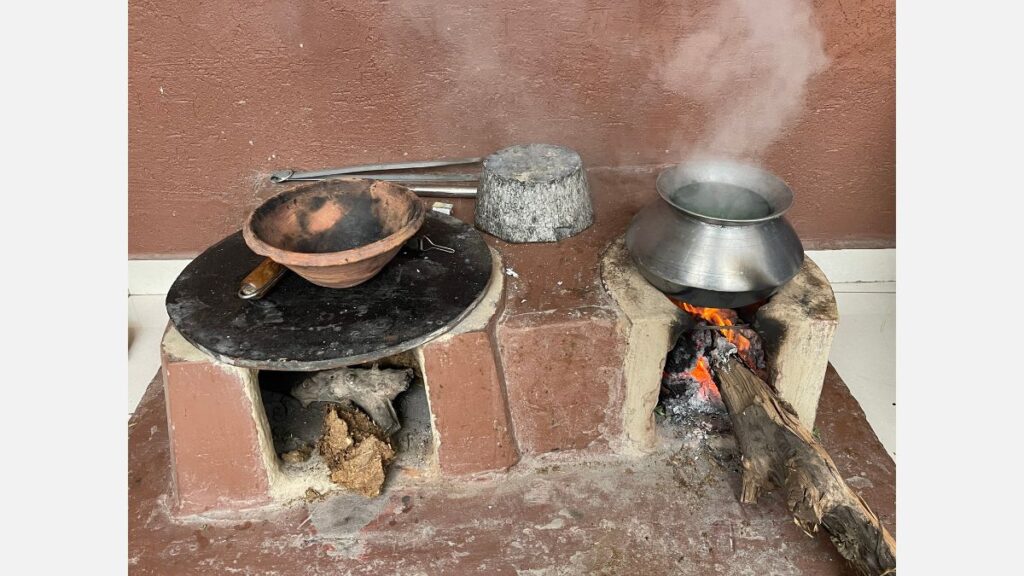
A gentle smell of wood smoke drifts from the chulha—a clay stove where someone is roasting rotis. Near it, a charpai (woven bed) stands under a tree. An elderly man lies on it, a turban covering his face, resting peacefully. This scene repeats in many homes. The chulha feeds, the charpai comforts. These simple things carry great meaning in village life.
Temples, Gurdwaras, and Quiet Moments
In the middle of the village, a small Gurdwara stands with a white dome. You remove your shoes, cover your head, and enter. The sound of the shabad fills the air, soft and calming. In a quiet corner, an old man folds his hands and prays. A few steps away, a small temple stands with red flags fluttering. Religion here is not a show. It’s part of daily life. Faith gives strength. It offers hope. It keeps the heart at peace.
The Role of Animals in Village Life
Buffaloes, Goats, and Loyal Dogs
Animals are everywhere in a village. Buffaloes chew slowly in their sheds. Goats walk freely in small groups, nibbling at plants. A dog follows you for a few steps, friendly but watchful. These animals are not just livestock. They are part of the household. Each one has a name, a routine, and a role. A cow gives milk. A dog guards the home. A hen lays eggs. Their value is deep and respected.
The Bond Between Humans and Animals
The bond between villagers and animals is emotional. A child hugs a calf like a toy. An old man pats his ox gently after feeding it. These acts show love. Animals work hard here. They also receive care, respect, and affection. It’s a give-and-take that builds over time. It’s not a relationship of use, but one of trust.
A Stop for Lassi and Stories
Hospitality in a House
You stop near a house, and you will be welcomed with a smile and offered a glass of water or lassi. Lassi is thick, cold, and sweet. The glass sweats in your hand. You sit on a charpai, under the shade of a mango tree. You don’t know these people. But you are treated like a guest. That’s the spirit of Punjab. Hospitality is not a rule—it’s a natural habit.
Grandfather’s Folktales
The old grandfather joins you and begins to talk. He shares stories of his childhood. He tells you about old days, about farmers walking miles to sell their crops, about ghosts near the banyan tree. His voice rises and falls like a song. You sit quietly, taking it all in. The stories are not written in books. They are kept alive in people like him.
Women and the Rhythm of Work
Songs While Working
In the fields and homes, women are always moving. They work with their hands—cutting, kneading, cleaning. But their voices are never silent. They sing while they work. The songs are folk tunes passed down from mothers and grandmothers. They talk of love, pain, harvests, and gods. These songs are like soft background music to village life.
The Strength of Simplicity
The women wear simple clothes, colorful dupattas, and silver bangles. They don’t have machines or helpers. But they get things done with grace. They carry heavy pots on their heads while balancing children on their hips. Their strength is quiet but powerful. You can’t help but admire it.
The Village Well – A Meeting Point
In today’s world, wells are almost gone from the villages. But in the old days, the village well was more than a water source. It used to be a social center. Women come here with metal pots. They fill them, balance them on their heads, and chat. Gossip is shared. Recipes are exchanged. A girl learns how to tie her dupatta properly from an elder. A new bride is welcomed. It’s a place of stories, laughter, and everyday magic.
Evening Shadows and The Return Home
Sunsets Over The Fields
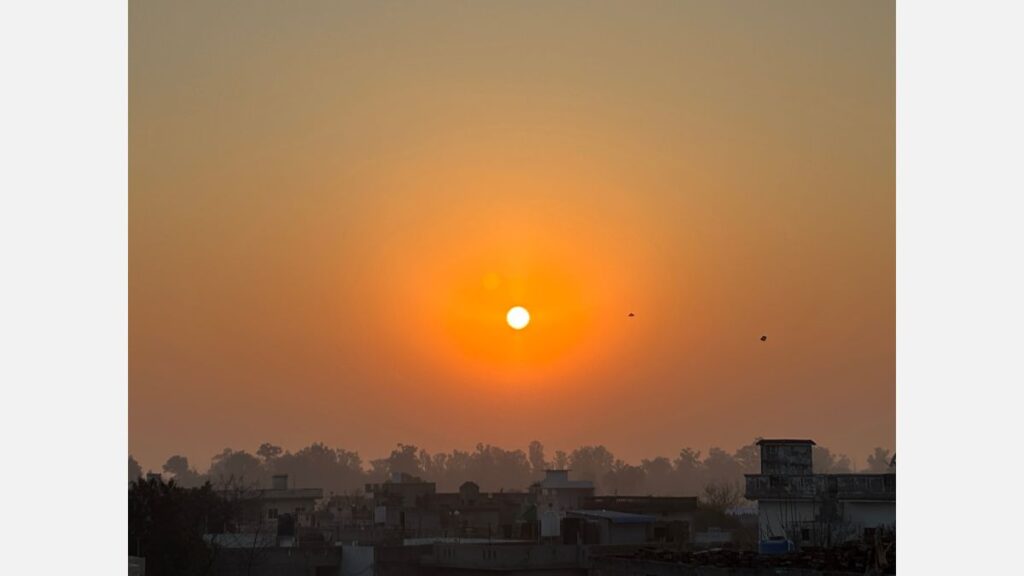
The sun begins to dip below the horizon. The sky turns into a painting—orange, red, purple. Shadows grow longer. The fields look quiet, like they are going to sleep. Birds return to their nests. The air feels cooler. The day is ending, but something in your heart wants to stay.
Walking Back With A Full Heart
You turn around and walk back the way you came. But you’re not the same. The walk has changed something. Your heart feels light and full. The stories, the faces, the fields—they stay with you. You leave the village. But the village doesn’t leave you.
Why Village Walks Matter
In a world that moves fast, a village walk slows you down. It brings you back to basics. It reminds you of the power of community, nature, and simplicity. These walks heal you, ground you, and give you clarity. They connect you to something bigger—life in its raw, honest form.
Conclusion
A walk through a Punjab village on a sunny afternoon is not just a trip. It’s a connection to the land, people, and timeless traditions. You see nature up close. You meet people who live with heart. You hear stories that aren’t in books. This walk feeds your soul. It brings peace, joy, and a sense of belonging. If you’ve never taken such a walk, now is the time. Let the sun guide you, let the soil speak, and let the stories live on in your heart.
FAQs: Afternoon Walk Through a Punjab Village
1. What is the best time to walk through a Punjab village?
The best time is late afternoon, around 3–5 PM. The sun is warm but not too hot, and the village is full of activity.
2. What should I wear on a village walk?
Wear light cotton clothes, a hat or dupatta for sun protection, and comfortable shoes. Keep it simple and respectful.
3. Can I take photos in a village?
Yes, but always ask for permission. Villagers are welcoming but value their privacy.
4. Is it safe to walk through villages alone?
Yes, most villages in Punjab are safe. But it’s best to go with a local or someone who knows the area if it’s your first time.
5. What should I bring on my village walk?
Carry water, a camera or notebook, sunscreen, and an open mind. Be ready to see, learn, and enjoy.
Read More
https://raowal.com/how-lantern-lamps-keep-punjab-villages-glowing/

Harman is a proud native of Raowal. With a deep-rooted connection to the land and its people, we contribute stories, updates, and insights that reflect the true spirit of Raowal. Our website aims to keep people connected to their heritage and village while showcasing the beauty of village life to the wider world. Especially people from the village Raowal who live abroad.



2 Comments
Hardeep · 20 July 2025 at 5:07 am
Very well explained about village . Full of information and knowledgeable.Please also post about summer foods in Punjabi
Harman · 20 July 2025 at 5:14 pm
Thanks, Hardeep for visiting our website. Sure, we will soon add a post about summer foods in Punjabi
Comments are closed.