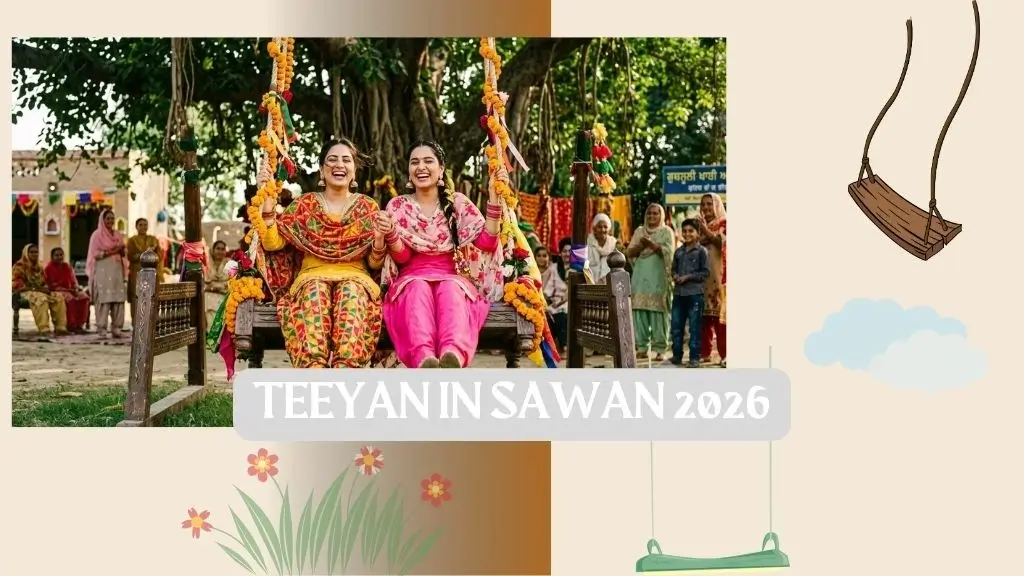
Teeyan in Sawan 2026 is one of the most joyful festivals for Punjabi women. It falls in the month of Sawan, which is the monsoon month. This festival brings color, music, and happiness. Women wear bright clothes. They sing folk songs. They swing on tall swings tied to trees.
In this guide, we will explain everything about Teeyan in Sawan 2026. You will learn its meaning, history, dates, and how people celebrate it today.
What Is Teeyan?
Teeyan is a traditional Punjabi festival. It is celebrated mostly by women and girls. The festival marks the arrival of the monsoon season. After the hot summer, rain brings relief. Farmers feel happy because rain helps their crops grow. Women feel happy too. They get a break from daily work. They meet friends and family. They sing, dance, and enjoy the rainy weather together.
Teeyan in Sawan 2026 will carry the same spirit. It is not just a festival. It is a symbol of freedom and sisterhood. Married women often visit their parents’ homes during this time. This tradition is called “sawan da mahina,” which means the month of Sawan. It gives women a chance to relax and reconnect with their roots.
When Does Teeyan in Sawan 2026 Fall?
The Sawan month follows the lunar calendar. It usually starts in July and ends in August. Teeyan in Sawan 2026 will likely fall around the third day of Sawan month, known as “Teej” or “Teeyan.” Based on the Hindu lunar calendar, this date generally lands in late July.
It is wise to check a local Punjabi calendar or panchang closer to the date. Dates can shift slightly each year because the festival follows the moon, not the fixed solar calendar.
Many families in Punjab, Haryana, and other regions begin small celebrations a few days before the actual date. So the joy of Teeyan in Sawan 2026 often stretches across the whole month, not just one single day.
The History Behind Teeyan
Teeyan has deep roots in Punjabi culture. Old stories say that Goddess Parvati fasted and prayed during this month. She wanted to marry Lord Shiva. Her wish came true. Since then, women have celebrated this month with hope and devotion. They pray for happy marriages, good health, and prosperity for their families.
Over time, the festival grew beyond religion. It became a cultural event. Villages would come together. Women would build swings under big trees, usually peepal or banyan trees.
They wore new clothes. They applied henna on their hands. They cooked sweet dishes. This tradition continues even today, though in a more modern form.
Teeyan in Sawan 2026 will connect old traditions with new ways of celebration. Some things never change, like the swings and the songs. Other things have changed, like the venues and the outfits.
Swings: The Heart of Teeyan
No festival feels complete without swings. In fact, swings are the most famous symbol of Teeyan. Long ropes are tied to strong tree branches. Wooden planks or cloth seats hang from the ropes. Women take turns swinging high into the air. They sing songs while swinging. This activity brings pure joy and laughter.
Swinging during Teeyan in Sawan 2026 is more than just fun. It represents freedom. For centuries, women had limited chances to step outside their homes.
Teeyan gave them a reason to gather outdoors, laugh loudly, and enjoy nature. The swing became a symbol of that short break from daily duties.
Today, you can find these swings in villages, city parks, and even at cultural events. Some communities set up decorated swings with flowers and ribbons. Photographers often visit these spots because the scene looks so colorful and lively.
Giddha and Folk Songs
Giddha is a traditional Punjabi dance. Women perform this dance during Teeyan. They form a circle. They clap their hands. They sing folk songs called “boliyan.” These songs talk about love, family, rain, and daily village life. Some songs are funny. Some are emotional. All of them carry deep meaning.
During Teeyan in Sawan 2026, giddha performances will likely take place in many towns and cities. Cultural groups often organize special shows. Schools and colleges also host Teeyan events for students. This keeps the tradition alive for younger generations.
The rhythm of the dhol drum adds energy to the dance. Women move in sync with the beat. Their bright dupattas and jewelry sway with every step. It is truly a beautiful sight to watch.
Mehendi and New Clothes
Mehendi, also called henna, plays a big role in Teeyan. Women apply mehendi designs on their hands before the festival. Simple patterns like flowers, leaves, and peacocks are common. Some women prefer detailed bridal-style designs.
New clothes are also part of the celebration. Bright colors like red, yellow, green, and orange are popular choices during Sawan. These colors match the mood of the rainy season. Bangles, called “choodiyan,” complete the traditional look. Many women wear a full set of bangles that match their outfit.
For Teeyan in Sawan 2026, expect to see this same colorful fashion across Punjab and in Punjabi communities worldwide. Social media will likely be full of photos showing these vibrant outfits and henna designs.
Traditional Food of Teeyan
Food plays an important part in any Indian festival, and Teeyan is no different. Sweet dishes are especially popular. One famous dish is “kheer,” a sweet rice pudding made with milk and sugar. Another common treat is “ghevar,” a round, sweet dessert soaked in sugar syrup. This dessert is especially linked with the monsoon season in North India.
Savory snacks like pakoras are also common. Since it is the rainy season, hot and crispy pakoras taste perfect with a cup of tea. Families often gather for a shared meal during Teeyan celebrations. Food brings everyone closer and adds to the festive mood.
If you plan to celebrate Teeyan in Sawan 2026, you might want to try cooking some of these traditional dishes at home. They are simple to make and taste amazing during the rainy season.
How People Celebrate Teeyan Today
Modern celebrations of Teeyan look a bit different from village traditions, but the core spirit remains the same. Here is how people usually celebrate today:
- Community Events: Many cities organize Teeyan fairs or melas. These events include swings, music, food stalls, and dance performances.
- Family Gatherings: Married women often visit their parents’ homes. This visit is called “peke aana” in Punjabi.
- Cultural Programs: Schools, colleges, and Punjabi associations abroad host Teeyan-themed programs with giddha and folk singing.
- Social Media Sharing: Many young people post photos and videos of their Teeyan outfits, mehendi, and swing moments online.
- Religious Rituals: Some women fast and pray for their husband’s long life and family well-being.
Teeyan in Sawan 2026 will likely see a mix of all these activities. Traditional villages will keep the old customs alive. Cities will add a modern touch with organized events and social media trends.
Why Teeyan Matters in Punjabi Culture
Teeyan is more than a festival. It is a reminder of women’s strength, joy, and friendship. It gives women a special space to express themselves freely. The songs they sing often speak about their feelings, their families, and their dreams. This makes Teeyan a very personal and emotional festival, not just a cultural show.
The festival also connects generations. Grandmothers, mothers, and daughters often celebrate together. Older women teach younger ones the traditional songs and dance steps. This keeps the culture alive for the future.
Teeyan in Sawan 2026 will continue this beautiful chain of tradition. Even with modern changes, the heart of the festival stays the same: joy, sisterhood, and celebration of the rainy season.
Tips to Enjoy Teeyan in Sawan 2026
If you want to celebrate this festival fully, here are some simple tips:
- Wear bright, comfortable clothes suited for the season.
- Try applying simple mehendi designs a day before the event.
- Learn a few giddha steps or folk songs if you plan to join a group.
- Visit a local Teeyan fair if one is happening near you.
- Cook or try traditional sweets like kheer or ghevar.
- Spend time with family, especially if you are visiting your parental home.
These small steps can help you enjoy Teeyan in Sawan 2026 in a meaningful way, whether you live in Punjab or anywhere else in the world.
Conclusion
Teeyan in Sawan 2026 will bring the same warmth and happiness that this festival has always carried. It celebrates rain, womanhood, family bonds, and Punjabi culture. From tall swings under old trees to lively giddha dances, every part of this festival tells a story of joy and tradition.
Whether you celebrate it in a village, a city, or even abroad, the spirit of Teeyan stays the same. It reminds us to pause, connect with loved ones, and enjoy the simple pleasures of life during the monsoon season.
FAQs: Teeyan in Sawan 2026
1. What is Teeyan in Sawan 2026?
Teeyan in Sawan 2026 is a traditional Punjabi festival celebrated during the monsoon month of Sawan. It focuses on swings, folk songs, dance, and family gatherings, mainly among women.
2. When will Teeyan in Sawan 2026 be celebrated?
Teeyan usually falls in late July, based on the lunar calendar. The exact date can shift slightly each year, so it is best to check a local panchang closer to the time.
3. Why do women swing during Teeyan?
Swinging is a symbol of joy and freedom. It gives women a chance to step outside, laugh, and celebrate the rainy season together with friends and family.
4. What foods are traditionally eaten during Teeyan?
Common foods include kheer, ghevar, and pakoras. These dishes match the festive and rainy mood of the season.
5. Is Teeyan celebrated outside Punjab?
Yes. Punjabi communities around the world, including in Canada, the UK, and the USA, organize Teeyan events. These often include giddha performances, music, and food stalls.
Harman is a proud native of Raowal. With a deep-rooted connection to the land and its people, we contribute stories, updates, and insights that reflect the true spirit of Raowal. Our website aims to keep people connected to their heritage and village while showcasing the beauty of village life to the wider world. Especially people from the village Raowal who live abroad.