Directions in Punjabi
Why Learning Directions Matters
Direction Names in Punjabi are very useful in everyday life. Whether you are traveling, studying, or talking to someone, directions help you understand where things are. Imagine asking someone for a location but not knowing the basic direction words.
It becomes confusing, right? That is why learning these simple words can make communication much easier. These words are not just for maps. They are also used in daily conversations in homes, streets, and markets.
When you learn directions, you also learn how people think about space. In Punjabi culture, directions are often used in a practical way. People may say, “Go towards the east side of the village” or “The shop is on the north road.” So, knowing these words helps you feel more confident.
It also helps you connect better with Punjabi-speaking people. You start understanding their way of speaking and living.
Basic Direction Names in Punjabi
North, South, East, and West Explained
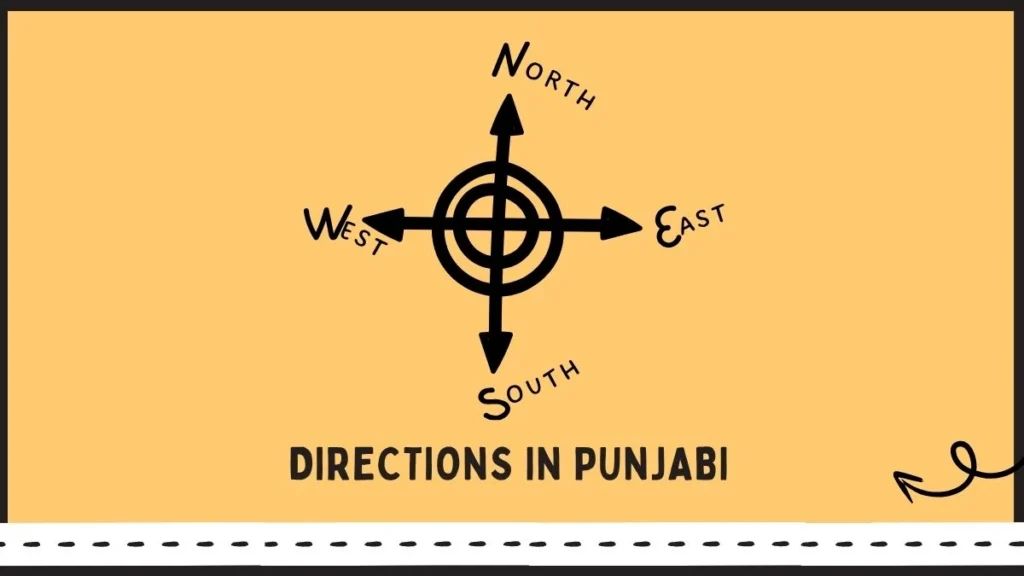
Let’s start with the four main directions. These are the most important ones:
| Direction | Punjabi Word | Pronunciation |
| North | ਉੱਤਰ (Uttar) | ut-tar |
| South | ਦੱਖਣ (Dakkhan) | dak-khan |
| East | ਪੂਰਬ (Poorab) | poo-rab |
| West | ਪੱਛਮ (Pachham) | pach-ham |
These four words form the base of all directions. If you remember them well, you can easily learn the rest. Direction Names in Punjabi are simple and easy to pronounce once you practice a little. You can say them aloud a few times every day. It helps your tongue get used to the sounds.
Simple Punjabi Words and Pronunciation
Pronunciation is very important. If you say a word wrong, it may confuse the listener. For example, “Poorab” means east. But if you say it incorrectly, it may not be understood. Try to listen to native speakers if possible. Repeat after them. Practice in front of a mirror. It may feel funny at first, but it works.
Another good idea is to use these words in sentences. For example, “The sun rises in the Poorab.” This helps you remember better. Learning Direction Names in Punjabi becomes easier when you use them in real situations.
Understanding Intermediate Directions
Northeast, Northwest, Southeast, Southwest
Once you know the basic directions, you can move to the next level. These are intermediate directions:
| Direction | Punjabi Word |
| Northeast | ਉੱਤਰ-ਪੂਰਬ |
| Northwest | ਉੱਤਰ-ਪੱਛਮ |
| Southeast | ਦੱਖਣ-ਪੂਰਬ |
| Southwest | ਦੱਖਣ-ਪੱਛਮ |
These may look longer, but they are actually combinations of basic words. For example, Northeast is “Uttar-Poorab.” It simply joins North and East. This makes learning easier. You don’t have to memorize new words. You just combine what you already know.
How to Use Them in Daily Conversation
In real life, people use these directions when giving more exact locations. For example, someone might say, “The farm is in the southwest area.” This gives a clearer idea of the location. When you learn Direction Names in Punjabi, you can understand these details better.
Try using these in your daily practice. Even if you are not in Punjab, you can still practice. Look at a map. Pick a place. Describe it using directions. This builds confidence and improves your skills.
Punjabi Language and Its Cultural Roots
Punjabi is a rich and lively language. It is spoken mainly in the Punjab region of India and across the world where Punjabi’s live. The language has deep cultural roots. It reflects traditions, farming life, and community living.
Directions play an important role in this culture. Many villages are organized based on directions. Even farms and fields are often described using directional terms.
When you learn Direction Names in Punjabi, you are not just learning words. You are also learning a part of Punjabi culture. You start seeing how people describe their surroundings. This makes your learning experience more meaningful. It also makes it more fun, because you are not just memorizing. You are understanding.
How Punjabis Use Directions in Daily Life
Directions in Villages and Cities
In Punjabi villages, directions are often used instead of street names. A person might say, “Go towards the north side of the village.” This is common because villages may not have clear road signs. So, directions become very important.
In cities, things are a bit more modern. There are street names and maps. But still, people use directions. For example, “The mall is on the west side.” So, learning Direction Names in Punjabi is useful everywhere.
Giving and Asking for Directions
When you ask for directions, knowing these words helps a lot. You can understand the answer quickly. Also, when you give directions, you sound more natural. It shows that you are comfortable with the language.
Try simple sentences like:
- “Which direction is the market?”
- “Go towards the east.”
These small steps make a big difference.
Easy Tricks to Remember Direction Names in Punjabi
Memory Techniques
Learning new words can be hard. But there are tricks to make it easier. One simple trick is association. Connect the word with something you already know. For example, “Poorab” sounds like “poor-ab.” You can create a funny story in your mind to remember it.
Another trick is repetition. Say the words every day. Write them down. Use flashcards. The more you repeat, the better you remember.
Practice with Real-Life Examples
Practice is key. Look around your home. Identify directions. Say them in Punjabi. For example, “The window is in the north.” This makes learning active and fun. Direction Names in Punjabi become part of your daily life.
Direction Names in Punjabi for Students and Travellers
Why Students Should Learn Them
Students can benefit a lot from learning directions. It helps in geography, language learning, and communication. It also improves thinking skills. When you understand directions, you understand space better.
Using Direction Names in Punjabi in school projects or conversations can make learning more interesting. It also helps in exams and presentations.
Helpful for Travel and Navigation
If you travel to Punjab, these words are very helpful. You can ask for directions easily. You can understand local people better. This makes your travel experience smoother and more enjoyable.
Even with mobile maps, knowing directions is useful. Technology may fail sometimes. But your knowledge will always help you.
Common Mistakes While Learning Direction Names
Confusing Words
Some learners confuse east and west. This is common. To avoid this, practice regularly. Use visual aids like maps. Repeat the words again and again.
Pronunciation Errors
Pronunciation mistakes can create confusion. Listen carefully. Practice slowly. Focus on each sound. Over time, you will improve. Learning Direction Names in Punjabi becomes easier with patience.
Fun Activities to Learn Direction Names in Punjabi
Games and Exercises
Make learning fun by playing games. You can use quizzes, flashcards, or apps. Ask your friends questions. Turn it into a game. This keeps you engaged and motivated.
Practice with Maps
Take a map and practice directions. Pick a location. Describe it using Punjabi directions. This is a great way to learn. It also improves your understanding of geography.
Conclusion
Learning Direction Names in Punjabi is simple and useful. It helps in daily life, travel, and communication. With a little practice, anyone can learn these words. Start with basic directions. Then move to intermediate ones. Use them daily. Make learning fun and active. Over time, you will become confident and fluent.
FAQs: Direction Names in Punjabi
1. What are the basic direction names in Punjabi?
The basic directions are Uttar (North), Dakkhan (South), Poorab (East), and Pachham (West).
2. Why should I learn direction names in Punjabi?
They help in communication, travel, and understanding the language better.
3. Are direction names in Punjabi hard to learn?
No, they are simple and easy with regular practice.
4. How can I remember Punjabi direction words easily?
Use repetition, practice daily, and connect words with real-life examples.
5. Where are these directions commonly used?
They are used in daily conversations, travel, maps, and giving directions.

Harman is a proud native of Raowal. With a deep-rooted connection to the land and its people, we contribute stories, updates, and insights that reflect the true spirit of Raowal. Our website aims to keep people connected to their heritage and village while showcasing the beauty of village life to the wider world. Especially people from the village Raowal who live abroad.